
The wine aisle has always been both an opportunity and a headache for supermarkets. It’s a high-margin category, yet one that leaves customers overwhelmed and unsure. The challenge is clear: how do you educate and guide shoppers about wine when you have neither a sommelier on site nor the luxury of extra shelf space or long product pages online?
For supermarkets, whether offline or online, the solution lies not in expanding the shelves, but in smarter communication. The right educational touchpoints, placed in the right locations or at the right moments, can transform confusion into confidence and drive bigger baskets.
This article explores how supermarkets can use concise, high-impact wine education strategies that fit within tight physical and digital spaces, and how AI-powered tools like sommelier.bot make it achievable without hiring an expert team.
The Space Paradox: Too Many Wines, Too Little Room
Wine sells best when it’s explained. But supermarkets face several constraints:
- Limited shelf space for educational material.
- Generic product labels that fail to inspire or inform.
- No trained staff to offer guidance or recommendations.
- Minimal digital real estate for storytelling on e-commerce platforms.
- Competing priorities, wines are just one of thousands of SKUs in the store.
The result: customers either stick to what they know or grab the cheapest option. Both lead to stagnating wine sales and low customer loyalty.
Simplified, relevant, and dynamic guidance through education is the only way forward.
Why Education Drives Conversion in Wine
Wine is not like pasta or detergent, it’s an emotional, aspirational purchase. When customers understand what they’re buying, they spend more and come back for more.
Education creates value through:
- Confidence – fewer “wrong” purchases mean happier customers.
- Differentiation – supermarkets can stand out from generic retailers.
- Trust – being seen as a helpful guide, not just a seller.
- Data – understanding what customers want helps refine future assortments.
But in the context of a supermarket, wine education must be concise, visual, and conversational.
The Three Constraints Supermarkets Must Overcome
- Physical Space Constraints
Shelf talkers and neck tags are valuable, but they can’t replace human advice. The challenge is delivering storytelling and pairing guidance in a glance. - Digital Space Constraints
Online supermarkets often limit product descriptions to a few lines. Long-form copy doesn’t fit, yet customers still expect context and pairing ideas. - Knowledge Constraints
Staff turnover, lack of training, and limited expertise mean relying on human-led wine education is not scalable.
The solution is to embed intelligence into the customer journey, not just information.
Smart Wine Education Strategies That Fit in Small Spaces
Here’s how supermarkets can deliver value without cluttering shelves or screens.
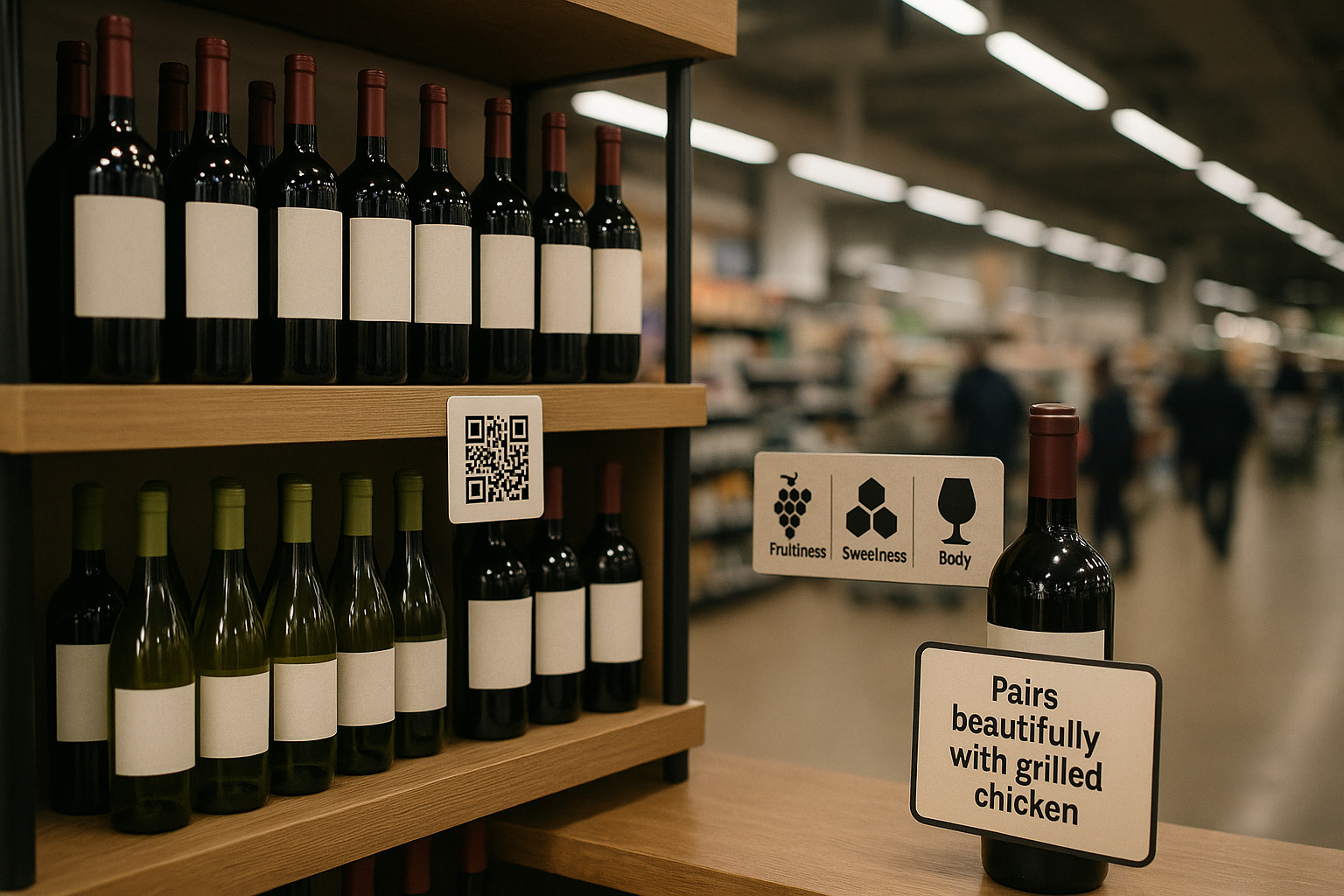
1. Micro-Education on the Shelf
- QR Codes Linked to Dynamic Content: Replace static shelf talkers with QR codes leading to interactive AI-based recommendations or short wine stories.
- Segmented Shelf Labels: Use simple emotional or functional categories. Ex: “Crisp Whites,” “Perfect for Pasta,” “Weekend Reds.”. Because you cannot plan them all, use the sommelier.bot to ask the user the type of occasion.
- Visual Cues: Icons for taste (fruity, oaky), sweetness, and body can replace paragraphs of text.
2. Snackable Digital Education
- One-Line Pairing Tips: Add short, bold statements like “Pairs beautifully with grilled chicken” or “Ideal for cheese night.”
- Interactive Pop-ups: Integrate small “Ask the Sommelier” windows powered by the leader AI sommelier.bot to answer common questions without leaving the page.
- Dynamic Recommendations: Display top alternatives based on browsing behavior, such as “If you liked this, try these similar wines.”
3. Conversational Interfaces
Instead of overwhelming visitors with filters, conversational AI can deliver personalized guidance within seconds.
- “What are you cooking tonight?”
- “Do you prefer something fruity or dry?”
- “Are you shopping for a gift or dinner?”
That’s precisely what sommelier.bot delivers: contextual, educational conversation that replaces static lists with human-like advice.
Tips: adopt AI solutions that can create a fully personalized conversation, not pre-defined filters. Because all clients are different!
Turning Constraints Into Data Opportunities
Every question a shopper asks is a data point. By deploying AI-driven wine assistants, supermarkets can collect insights such as:
- Which food pairings are most searched for.
- Which regions or varietals trigger confusion.
- Which price ranges generate the most engagement.
This data can then inform merchandising, promotions, and even private-label development.
Education, in this sense, is not just a service; it’s a feedback loop for better business decisions.
Offline Meets Online: Unified Learning Experiences
The smartest supermarkets are bridging the in-store and digital experience.
Example approaches:
- In-store QR tags linked to the AI sommelier widget.
- Cross-merchandising: suggest wine pairings while at the cheese or meat aisles.
- Post-purchase learning: after checkout, offer short tips via email or app notifications to encourage future exploration.
This hybrid approach ensures customers keep learning, even after they’ve left the aisle, reinforcing trust and encouraging repeat visits.
For a deeper exploration of wine engagement tactics, see our articles on simplifying wine selection in supermarkets and building customer trust online.
Integrating AI in supermarkets without rebuilding infrastructure
Supermarkets often hesitate to innovate because they fear integration headaches. But modern AI tools are designed to fit seamlessly into existing ecosystems.
Sommelier.bot, for example:
- Works with existing XML or Google Shopping feeds.
- No dedicated tech team required: plug-and-play installation in days.
- Adaptable format: in-store kiosks, mobile apps, or e-commerce widgets.
- Brand-consistent tone: customizable to match supermarket identity.
- Multilingual capability: essential for international retailers.
The goal isn’t to replace human touch but to scale expertise through automation, ensuring every customer gets advice that feels personal, even in a crowded supermarket.
Tactical Roadmap: How to Start
- Audit Your Current Wine selection
Identify categories, user experiences, wine data and XML/CSV feeds - Introduce Conversational Tools
Start with one or two digital entry points, a web chatbot or a shelf QR integration. - Offer opportunities to start conversations everywhere
QR codes, tablets, e-commerce website, pictures, infographics online and offline - Gather and Analyze Data
Use AI conversations to track preferences and identify trends in consumer intent. - Scale Gradually
Roll out successful pilots across stores and online channels.
This structured approach minimizes cost while maximizing customer experience.
Why Supermarkets Can Lead the Next Wine Revolution
Unlike specialized retailers, supermarkets own the volume, reach, and frequency of customer interaction. They are perfectly positioned to transform wine discovery from a confusing shelf to a guided experience, if they embrace smart, space-efficient education.
AI-powered systems like sommelier.bot make this transformation feasible and affordable. They bridge the gap between accessibility and expertise, giving every shopper, from novice to enthusiast, the confidence to explore.
Supermarkets that turn education into experience will not just sell more wine. They’ll create customers who trust their brand, return for advice, and share their discoveries.
If you’re ready to bring digital wine education to every aisle, visit sommelier.bot and request a demo. Because great wine deserves more than a price tag, it deserves a story, even in small spaces.
Test the leading AI sommelier
Open the sommelier.bot app and start a full conversation about wine & spirits. If you like it, get it for your own inventory, or upload it for FREE on the public sommelier.bot AI app.


