
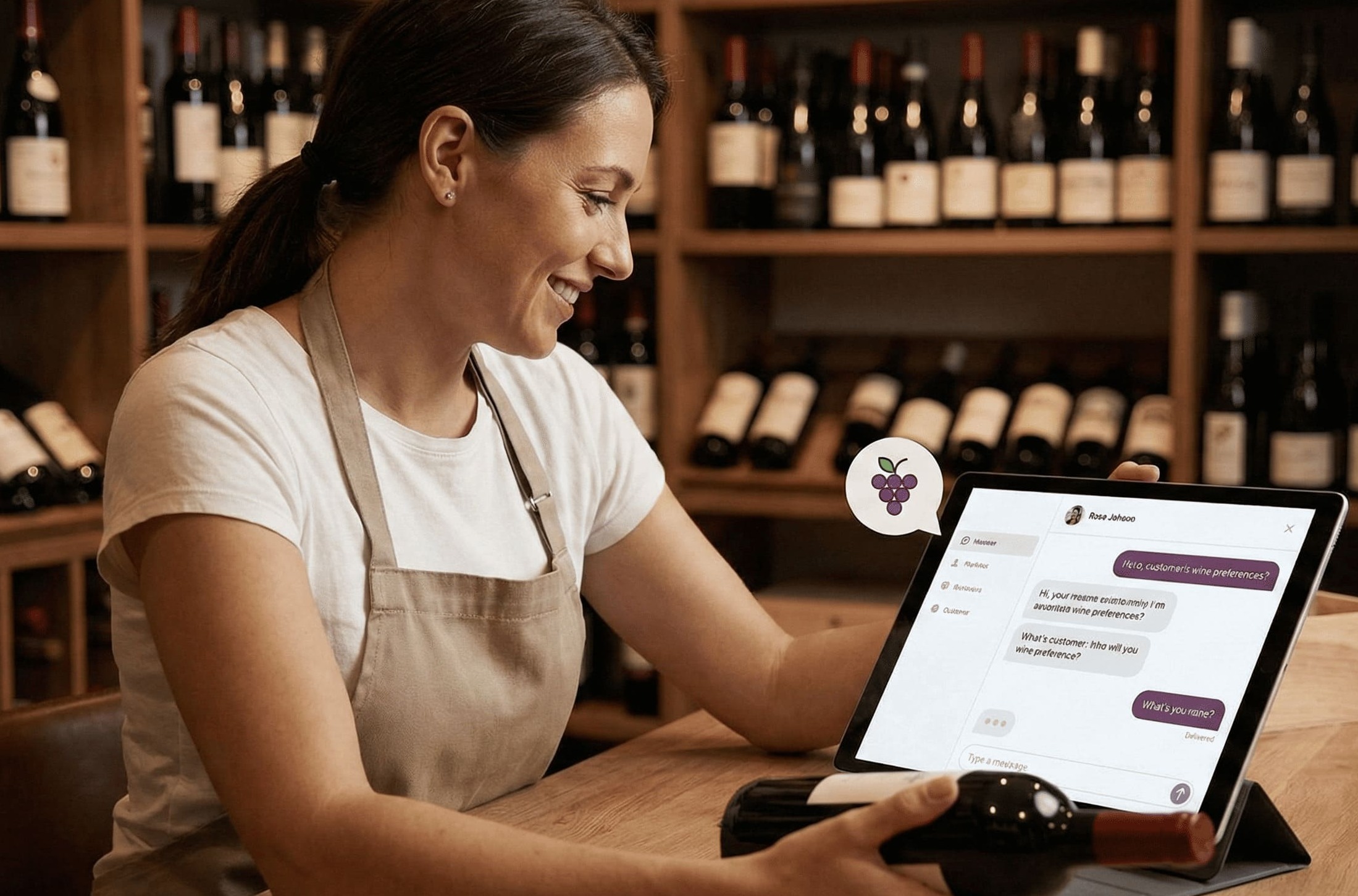
Online wine & spirits merchants operate in an environment where traffic, conversion, and visibility are increasingly at the mercy of external platforms (like Vivino) and algorithms (like Google). Today’s biggest challenge isn’t just “how do we rank higher?”, but “how do we keep control of our traffic and customer relationships when marketplaces and search platforms dominate discovery?”
How Marketplaces Own Your Traffic (Even When You Provide the Inventory)
Many merchants list their wines on large marketplaces like Vivino, assuming access to traffic will lead to more sales. The reality: these platforms may supply exposure, but you often surrender control. Some key issues:
- You depend on the marketplace’s algorithm for visibility and ranking. A policy change or algorithm tweak at the platform level can alter your reach overnight.
- You share or relinquish customer data: the platform owns the traffic, you fulfil the orders.
- You lose brand control: your offering becomes one listing among thousands, commoditised, priced primarily on visibility and volume, not on brand or service.
- Curling the risk: if you rely heavily on SEO or platform-search, you’re exposed to algorithm shifts at multiple layers: search engines, marketplace feeds, recommendation engines.
In short, even if you stock the wine, you don’t necessarily own the customer. And when algorithms change, you bear the risk.
Pain Points for Online Wine & Spirits Merchants in This Environment
As an online merchant, you’re facing a convergence of threats:
- Qualified traffic is dropping, as SEO becomes less effective and platforms favour their own listings.
- You struggle to create and nurture a community and to differentiate your service while large retailers and marketplaces dominate ad spend and algorithmic surfacing.
- You need to serve younger consumers who expect immediate, hyper-personalised experiences, yet you have little budget to test complex tech.
- You lack physical location advantages like “near me” searches.
- Your discovery patterns are changing: from search boxes to social feeds, AI agents, and marketplaces.
- You’re vulnerable to algorithm changes at every point in your funnel, especially when you don’t own the touchpoints or data.
These pressure points demand not just adaptation, they require a new architecture of visibility and ownership.
Strategic Resilience: Why You Must Own the Interaction, Not Rent It
Shift from Rented to Owned Channels
Rather than invest all your energy in platforms you don’t control (marketplaces, paid ads, aggregator apps), focus on building channels you own: your website, your conversational interface, your social networks, your first-party data. This way, when an algorithm changes, you aren’t left at the mercy of someone else’s feed.
Deliver Personalisation That Platforms Can’t Replicate
Mass marketplaces struggle to deliver bespoke personalisation at the merchant level because they serve thousands of sellers. As a dedicated merchant, you can give unique, tailored experiences at scale, creating differentiation and loyalty. That turns your customer from a cross-listing user into a direct relationship.
Leverage Data to Mitigate Risk
If you own the data about your visitors’ preferences, intentions, and behaviours, you gain resilience. When algorithm changes strike, you can pivot using your own dataset, not only scramble to recover lost visibility.
Prepare for Shorter Attention Spans & Changing Discovery Patterns
Younger consumers now discover via social media, AI assistants, voice search and apps, not just search engines. Because these discovery modes evolve rapidly, you need interaction-centric, conversational, mobile-first experiences that anchor users. That way, you reduce your dependence on any one algorithm-driven channel.
Tactical Framework: Protecting Your Business from Platform-Driven Risk
Here are actionable steps for wine & spirits online merchants:
- Install a conversational AI widget on your site that captures intent, personalises recommendations, brings the curiosity and fun back, and increases dwell time, so your site becomes a destination, not just a listing.
- Capture first-party data from every conversation: preferences, previous purchases, contextual triggers (food pairing, budget, occasion). Use this to build customer profiles, segment your audience, and effectively drive your marketing efforts.
- Build personalised follow-up journeys: based on what you learn, proactively email or engage with recommendations (“Since you liked the Rhône red, try this for your next BBQ”).
- Blend discovery and education: shorter educational snippets and pairing tips (e.g., “Try this with vegan tacos”) increase trust and reduce bounce from browsing lists.
- Diversify traffic sources: drive users via your owned channels (social, email, chat widget), not just through third-party marketplaces. When visibility falls on one algorithm, others are available.
- Track metrics aligned with resilience: look at conversion from your conversational interface, repeat purchase rate, drop-off after platform changes, not just raw traffic.
- Deploy low-risk tech: choose plug-and-play solutions like sommelier.bot to avoid large tech investments you cannot maintain.
How Sommelier.bot Builds Merchant Ownership, Not Dependence
In the context of this challenge, sommelier.bot presents a powerful alternative for online wine & spirits merchants. The platform does more than just provide a tech widget—it helps you own your customer relationship, data and visibility, rather than renting it from a marketplace.
Key differentiators:
- The conversational AI resides on your website or digital channel: visitors interact directly with you, not just through a marketplace.
- The data generated (questions asked, preferences indicated, conversions achieved) is owned by you, enabling insights, segmentation and loyalty.
- The platform enables your own brand voice and inventory to shine; you stay front and centre, not buried in a marketplace catalogue.
- Crucially, sommelier.bot’s business model is moving toward co-ownership by its merchant partners, meaning you become a stakeholder, not just a user. This aligns your interests with the platform rather than making you a traffic supplier to someone else.
- Together, these factors reduce your exposure to algorithmic risk because the customer journey starts with you, not a third-party feed.
Putting It All Together: Metrics & Recovery Planning
As you build resilience, focus on metrics that reflect engagement, not just traffic:
- Percentage of sessions initiated via your conversational interface vs. external platforms.
- Conversion rate for visitors who engage in the personalised flow.
- Repeat purchase rate and average order value for those users.
- Share of traffic and sales you control directly versus via third-party listings.
- Monitoring drop-off or traffic shifts after algorithm changes (search, marketplace, social) and how swiftly you recover.
If an algorithm update hits, follow your recovery playbook: activate your owned channel (chat widget, email), shift messaging via your brand site, adjust recommendations using your first-party data, and you’ll respond faster than merchants who only “list and pray”.
Why Online Wine & Spirits Merchants Have a Unique Opportunity Now
Large marketplaces may dominate general traffic, but they also commoditise listings and traffic flows. Small boutique merchants struggle to scale. But a focused online wine & spirits merchant has the agility to adopt systems like sommelier.bot quickly—and the brand authenticity to win loyalty where platforms cannot.
By shifting from dependency to ownership—owning the interaction, the data and the relationship—you establish a resilient foundation. One that can stand up to algorithm changes, marketplace shifts and the next wave of discovery patterns.
If you’re an online wine & spirits merchant ready to reduce your platform-dependence, enhance loyalty and control your future, visit sommelier.bot and request a demo. Ownership is no longer optional—it’s your competitive edge.
#ConversationalAgent #WineIndustry #WineRetail #WineEcommerce
Test the leading AI sommelier
Open the sommelier.bot app and start a full conversation about wine & spirits. If you like it, get it for your own inventory, or upload it for FREE on the public sommelier.bot AI app.


