
The Sale That Walked Out of The Door
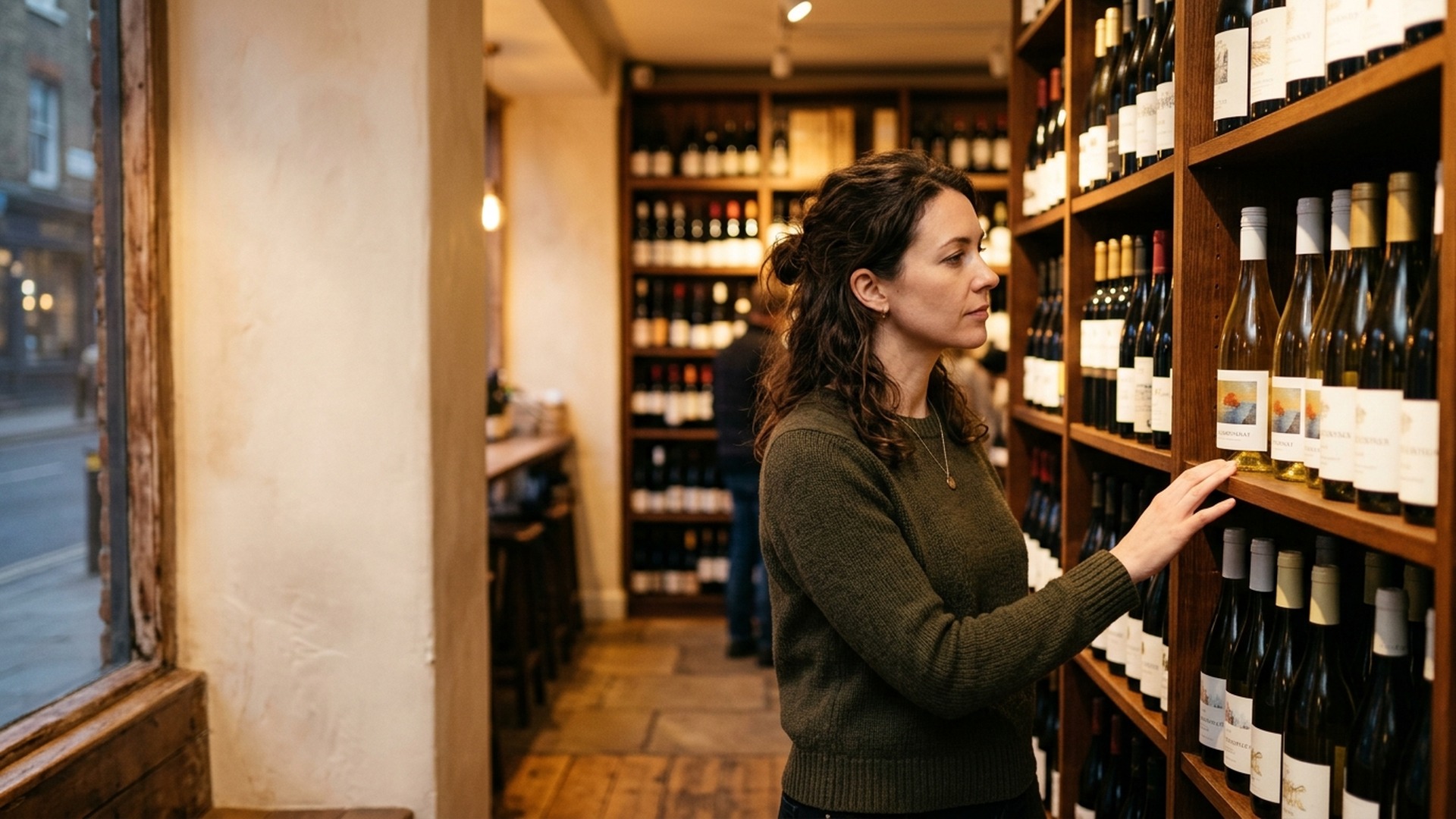
A customer walks into your shop. Not your website, your actual shop, the one with the creaking floorboards and the bottles you dusted this morning. She lingers near the Loire whites. You’re on the phone with a supplier, settling an invoice that should have been settled last week. By the time you hang up, she’s gone. No conversation. No sale. No idea what she was looking for.
Now picture that same moment online. She lands on your wine site, hovers over a Sancerre, hesitates, and clicks away. Except online, you never even knew she was there. There was no creaking floorboard to announce her.
For two decades, the wine trade has treated this as the cost of doing business. You can’t be everywhere. You can’t talk to everyone. The best advice you have to give is the advice you never get to give, because there is only one of you, and there are a hundred of them, and they don’t wait.
That constraint is the thing AI just removed. And once a constraint that old disappears, the business it was holding in place changes shape forever.
The Bottleneck Was Never the Wine
Here is the uncomfortable truth most merchants haven’t said out loud: the limit on your sales was never your inventory, your prices, or even your location. It was your throughput of attention. One sommelier can hold one good conversation at a time. A great shop floor on a busy Saturday is a queue of people waiting to be understood, and most of them leave before their turn.
Wine is the category where this hurts most, because wine doesn’t sell itself off a shelf. It sells through a conversation. As we argued in Wine Buyers Are Paralyzed, the modern buyer faces a wall of 400 bottles and freezes, not from lack of choice but from too much of it with no one to guide the decision. The guidance was always the product. The bottle was just what got handed over at the end.
What AI does is decouple guidance from headcount. For the first time, the conversation that only a trained human could have can run a thousand times at once, at 2am, in three languages, without tiring, without an off night, without a supplier on the other line.
This isn’t automation in the way the word usually lands. It’s not a vending machine. It’s closer to cloning your best floor person and letting them work every aisle simultaneously, forever.
From Catalog to Conversation
The shift is structural, not cosmetic. The old model organized everything around the catalog: region, grape, price, scroll. The new model organizes everything around the buyer’s actual question, which is almost never “show me your Burgundies” and almost always “what should I bring to dinner on Saturday.”
A modern AI agent reads the exact page a visitor is on, asks two or three sharp clarifying questions, and recommends from live, real-time inventory, not a theoretical list of wines you wish you had in stock. It explains why each bottle fits. It remembers what this customer loved last month. Then it either closes the sale or hands a warm, qualified lead to your team for the morning.
We broke down the engine behind this in The Merchant’s Playbook: the difference between a chatbot that collects questions and an agent that produces revenue. The gap between those two things is the whole story of where wine sales are heading.
The Adoption Clock Is Already Running
Every merchant we speak to wants to know if it’s too early. It is not too early. It is, if anything, slightly late, and getting later by the month.
The pattern is the one the trade has lived through twice already. The merchant who built a real website in 2003 looked eccentric to their peers; by 2010 they owned their region online. The estate that took social media seriously in 2014 looked frivolous; by 2020 the old houses were paying agencies to chase the following they’d built for free.
AI is that moment again, and the head start compounds in a way the previous waves didn’t. An agent trained on months of your own customers’ conversations gets measurably sharper at selling your inventory to your audience. A latecomer doesn’t just start behind, they start with a blank, untrained system while yours has a year of learning baked in.
What “Forever” Actually Means
When we say AI changes wine sales forever, we don’t mean it’s a passing efficiency gain. We mean the underlying constraint that shaped the entire industry, one expert, one conversation at a time, is gone and will not come back.
The sommelier’s job isn’t disappearing. It’s scaling. The expertise that used to reach one table at a time now reaches every visitor, every hour, in context. The human moves up the value chain, to curation, storytelling, and the relationships that genuinely need a human, while the machine handles the thousand conversations that used to evaporate unanswered.
The merchants who understand this have stopped asking whether AI will sell wine. They’re asking how fast they can be in the room before their competitor is.
The customer who walked out of your shop while you were on the phone? Online, with the right agent in place, she never walks out. That’s the change. And it’s permanent.
See what an always-on sommelier looks like on your own site. → sommelier.bot
#WineRetail #WineIndustry #DigitalSommelier #WineTech


