
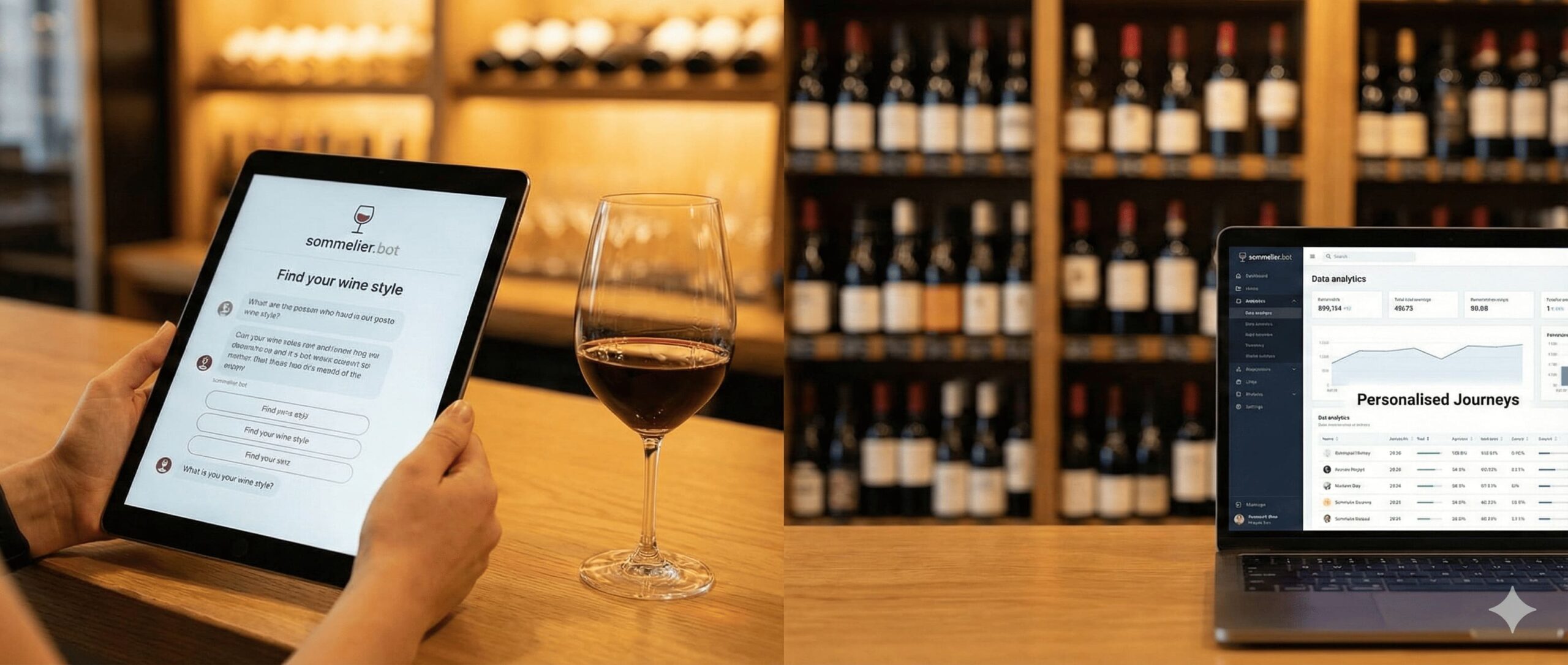
Online wine & spirits merchants operate in a landscape where traffic is fragmented, attention spans are shorter than ever, and standing out feels increasingly difficult. With tight budgets and limited technical resources, wine & spirits online merchants must find smarter ways to win visibility, not by spending more, but by personalising more. The strategic advantage lies in turning each visitor into a loyal customer through scalable personalisation that feels bespoke.
Why Personalisation Is the New Battleground
For your e-commerce wine business, traditional channels like SEO and paid ads are no longer delivering the same returns. Algorithm shifts, voice and AI search, plus larger players hoovering up paid visibility budgets, mean that qualified traffic is dropping, and conversion is fragile.
At the same time, your audiences, especially younger consumers, expect an experience that mirrors the in-store sommelier encounter: quick, intuitive, tailored to their taste, mood and occasion. When those expectations aren’t met, you lose them to a competitor, or worse, to a marketplace platform.
The real pain points you face as an online merchant:
- Difficulty driving qualified traffic and moving beyond broad hire-traffic tactics.
- Competing for visibility and ad spend in a marketplace dominated by large retailers.
- Engaging a community online and fostering loyalty when face-to-face interactions are missing.
- Scaling personalisation when technical resources are sparse and wine knowledge is complex.
- Shorter attention spans and fragmented discovery patterns (social media, AI agents) rather than long-form education.
- Risk of platform action or algorithm change disrupting your entire acquisition funnel.
If you don’t personalise at scale, you risk commoditisation – just another bottle on a shelf or search result. The good news? It doesn’t require massive budgets or tech teams if done strategically.
Strategic Levers for Scaling Personalisation
- Shift from “Product Lists” to “Personalised Journeys”
Instead of relying on generic lists or filters, design experiences that feel designed for the individual. Use conversational AI to ask simple questions (“What are you eating for dinner?” or “Do you prefer light or bold?”) and deliver curated results. This builds trust and relevance.
- Use data to understand, then pre-empt needs
Drive loyalty and not just first purchase by:
- Capturing preference data via interactive flows.
- Segmenting customers by behaviour: occasion-buyer, gift-shoppers, everyday buyers.
- Serving follow-up recommendations automatically: “You liked this wine, try that wine next”.
When you proactively suggest next moves, you signal expertise and value, not just merchandising.
- Build Community Through Shared Experience
Modern personalisation isn’t one-to-many marketing, it’s many-to-one. But you can still create communal loyalty by:
- Inviting members into “tasting journeys” curated for their profile.
- Offering exclusive digital experiences: virtual tastings suggested by your digital sommelier.
- Using your personalisation engine to identify potential ambassadors and reward them.
Tactical Steps for Online Wine & Spirits Merchants
To scale personalisation effectively, you need a mix of tactical entry points you can deploy quickly, and longer-term systems you’ll build over time.
Immediate actions:
- Install a conversational widget on your site that starts a friendly dialogue with visitors: “Let me help pick your bottle”.
- Use your visitor’s responses to tie into your inventory and present three recommended SKUs tailored to their answers.
- Highlight helpful contextual information: food pairing tips, similar price band suggestions, quick tasting notes.
- After purchase, trigger segmentation: send follow-up emails with “You recently bought wines from this country, you might want to know we have new references in stock”.
- Leverage analytics from conversations: what customers ask, where they drop off, and what they convert on. Then feed that back into your assortment.
Medium-term initiatives:
- Customise the experience for younger consumers: shorter flows, gamified elements such as a “Find your wine style quiz” or “How much do you know your fizz?” questionnaire, and a mobile-first interface.
- Integrate your personalisation engine with social media discovery: use conversational insights to inform ad targeting. Now you know that “light, fruity under €30” is a core segment.
- Build an owned channel: your personalisation engine becomes a reason for repeat visits, not just one-time purchases.
How sommelier.bot Solves the Key Pain Points
The platform sommelier.bot has been purpose-built for wine, beer, sake & spirits online merchants to scale personalisation without heavy tech burdens. Here’s how it maps directly to your pain points:
- Qualified traffic decline → Leads visitors into a tailored experience, improving conversion rather than relying solely on search.
- Community engagement → The conversational assistant builds relationships by asking questions and delivering value, not just listing products.
- Offering unique value & standing out → You differentiate through advice, context, and personalisation rather than price wars.
- Tech advantage → The widget installs with minimal effort, no large dev team required.
- Engaging younger consumers → The interface is designed for immediacy, mobile, with personalised responses and less friction.
- Limited budgets and tech resources → The SaaS model keeps costs predictable; you don’t need a full AI team in-house.
- Brand differentiation in a crowded market → Your brand identity stays front-and-centre; the AI adapts to your tone and inventory.
- Trust without face-to-face → The conversational experience simulates a sommelier interaction, building confidence in the buyer.
- Discovery beyond “near me” → Personalisation means you’re found through relevance, not just geographic claims.
- New discovery patterns → The AI lends itself to social referral, conversational search, and newer modes of discovery.
- Scalable personalisation → The system learns from each interaction and enables recommendations across hundreds of SKUs.
- Resistance to algorithm change → Your personalisation engine is owned, not solely dependent on external platforms.
Simply put: sommelier.bot gives you the infrastructure to deliver personalisation at scale, build loyalty, and keep your brand relevant, even and especially against larger competitors.
Metrics That Matter for Loyalty-Driven Personalisation
As a strategic leader (CTO, CMO, Head of Ecommerce, Chief of Digital), your KPIs for personalisation should include:
- Repeat purchase rate for “personalised journey” segments.
- Average order value for visitors engaging with the conversational flow.
- Conversion uplift compared to standard browsing behaviour.
- Engagement metrics, such as the type of questions asked or the number of started sessions, become early-stage loyalty indicators.
- Customer lifetime value (CLV) for those entered into the personalised experience.
Use these metrics to build a business case: personalisation is not a cost centre, it’s a loyalty multiplier and margin protector.
Getting Started Without Breaking the Bank
Here’s how you launch cost-effectively:
- Define one tight segment, such as “Weekend reds under €25”, and build a mini personalised journey.
- Plug in the conversational widget, route traffic from your existing channels, and track engagement.
- Use your results to iterate. Expand the personalisation scope gradually, with spirits, mixed packs, and gift ideas.
- Map your personalisation engine into your loyalty programme, and offer value to returning customers based on what you’ve already learned.
Your small budget doesn’t mean small impact, because when personalisation is done right, it scales to build loyalty and defend your margin.
In your competitive mix, personalisation is both your spearhead and your moat. Others may chase price or visibility, but you’ll win with relevance and performance.
Why Online Wine & Spirits Merchants Have a Unique Opportunity
Large platforms can’t and won’t personalise deeply for every merchant; while small boutiques struggle to invest and scale. The digital wine retailer sits in the ideal middle: agile, brand-focused, and able to adopt new tools fast.
By deploying personalisation early, you can lock in the loyalty of the next generation of consumers who expect immediacy, relevance and experience.
And by doing so, you turn what once felt like a budgetary constraint into a competitive advantage.
If you’re ready to scale personalization, build loyalty and thrive in the evolving wine e-commerce world, visit sommelier.bot and request a demo. Your next loyal customer might be just one conversation away.
#CustomerLoyalty #WineEcommerce #SmartAgents #WineIndustry #SommelierBot


