
61% of Wine Buyers Are Paralyzed. Here’s Who Will Win Them.
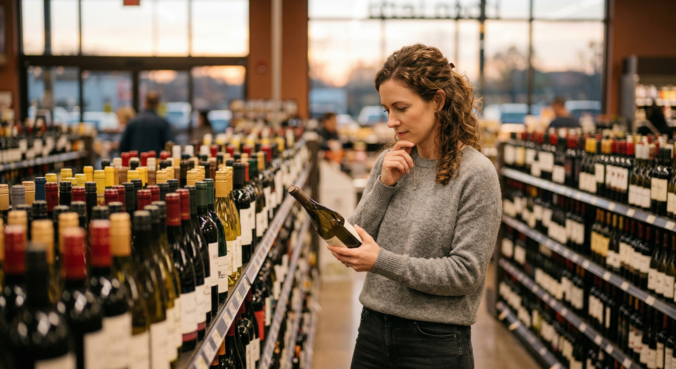
Sarah is 31, standing in her local supermarket at 7:15 PM on a Thursday. She has 47 minutes before she needs to be home. In front of her: 200 bottles of wine organized by region, price, and awards she doesn’t understand.
She’s hosting four friends for dinner. They’re having Thai green curry—something fresh, aromatic, a little spicy. Sarah bought the curry paste yesterday. She knows exactly what it tastes like. Now she needs wine.
She grabs a bottle that costs $16, checks the back label, puts it down. Grabs another—$22, marked “Award Winner 2024,” puts that down too. She spends nine minutes reading tasting notes that might as well be written in another language. “Notes of blackcurrant and graphite with a mineral finish.” What does that even mean?
She buys the one she’s seen on Instagram.
This is the paralysis moment.
And it’s happening to 61% of your customers.
The Uncomfortable Truth: It’s Not Disloyal. It’s Paralyzed.
The wine industry is confronting a brutal fact: consumers no longer just grab a bottle. They pause. They wonder if it’s worth it. They question whether it requires the right food, the right crowd, or the right moment. What used to be a simple decision became a commitment the moment bottles got expensive and the language got heavier.
The statistics confirm what retailers see on the floor every day:
- 56% of Gen Z wine purchases are pre-planned—but they’re also more open to discovery at the shelf, creating a dangerous moment where they either find guidance or make a default choice.
- 42% of wine buyers select by price alone, not preference or fit.
- Only 30% of Gen Z buy wine for casual home enjoyment—which means 70% are buying for a specific occasion, a specific moment, needing a specific fit.
This isn’t a loyalty problem. Your customer will try a different wine brand tomorrow if you don’t remove the friction today.
The Gen Z Wine Problem Isn’t What You Think It Is
Here’s what the industry got wrong: Gen Z doesn’t drink less wine because they don’t like wine. They drink less because the onboarding is broken.
Gen Z knows food. They’re obsessed with food. They follow food accounts, they cook from TikTok videos, they know what amplifies flavors and what kills a dish. But they don’t know wine because wine lives in a language designed by and for people who spent decades learning it.
They don’t know what “Alsatian Gewurztraminer” means. They’ve never heard of it. They don’t know that Riesling from the Mosel tastes different from Riesling from Alsace. They don’t know that oak aging affects mouthfeel. They don’t care about Parker points.
But ask them: “What goes with my Thai green curry?” and they’ll engage. They’ll think. They’ll actually care about the answer.
This is the linguistic gulf that’s paralyzing them.
According to recent research, Gen Z consume wine to celebrate special occasions, create a “vibe,” and share with friends—viewing wine as an accessory to highly social, festive moments rather than something integral to daily routine. But that’s exactly where they should be won. That’s the point of maximum vulnerability and maximum opportunity.
They need someone to say: “This wine will taste bright and a little floral. It will cut through the spice in your curry. It won’t fight the food. It will make the meal better.” Not: “This is a dry Gewurztraminer with 12.5% ABV and notes of lychee.”
The Palate Evolution Problem Nobody Talks About
Here’s the second paralysis layer: Gen Z doesn’t know their taste will change.
A 26-year-old who drinks off-dry Riesling at a wine bar thinks that’s her palate. She’ll ask for “that kind of wine” for three years. Then she’ll go to a dinner party and taste a serious Burgundy, and something will click. Her palate will evolve. But she’ll never know that’s normal. She’ll think she was wrong before.
Or worse: she’ll assume that because she liked one wine once, she should be able to find that exact taste again. Wine doesn’t work that way. But if nobody tells her this—if she’s buying alone, at the shelf, in nine minutes—she’ll just get frustrated and stop trying.
The virtual cellar model is how this gets solved. Not a cellar where you buy six bottles and commit. A cellar where you buy one bottle, taste it, log it, rate it, and the system learns you. The system sees you’re moving from off-dry to dry. It sees you’re becoming more adventurous. It anticipates where you’ll be in six months, not where you are today.
This is where the industry is finally catching up. AI-based customer preference analysis has increased personalized wine recommendation revenue by 20%. But most of that growth is happening online, where the friction is lowest. Retailers who haven’t solved this are losing ground.
The Tuesday Night vs. Anniversary Dinner Framework
Here’s what your system needs to understand: the wine choice for Tuesday night is not a smaller version of the anniversary dinner choice. They’re different problems.
Tuesday night: Low stakes. Low commitment. “Something I’ll enjoy, something that’s ready to drink now, something that won’t make me second-guess myself.” Price-sensitive. Fast. The paralysis here is: “Will I like this or will I waste $15?”
Anniversary dinner: High stakes. High commitment. “Something that will make this night feel special, something that matches the food we’re serving, something I can tell a story about.” Price-tolerant. Slower. The paralysis here is: “Will I choose something that lands or will I look foolish?”
These need completely different messaging. Completely different guidance. Completely different recommendation logic.
A retailer—or a platform like sommelier.bot—that understands this distinction can speak to Sarah on Thursday at 7:15 PM and say: “You’re cooking Thai green curry. You want something fresh and aromatic. We have five options at $18–$28 that will shine with that dish. Here’s the one Gen Z customers picked most often for this meal.”
That’s not a recommendation. That’s an answer.
Why Gen Z Doesn’t Know What They Want (And Why That’s Your Advantage)
Let me be direct: the wine industry has spent 50 years optimizing for people who already knew what they wanted.
Parker points. Regional classifications. Tasting note precision. All of it assumes the buyer knows the language. All of it assumes they’ve built mental models of taste through experience.
Gen Z hasn’t. But they will. And the retailer or brand that onboards them with their own language—not sommelier jargon, not wine terminology—wins them for life.
This is where AI agents fundamentally change the game.
An AI agent isn’t a chatbot. A chatbot answers questions. An AI agent with evolving sub-agents understands context, remembers past choices, predicts future needs, and coordinates multiple tools to solve problems you haven’t even articulated yet.
Imagine: Sarah takes a photo of the curry paste. The agent recognizes it. It pulls the flavor profile. It understands heat level, aromatic compounds, acidity requirements. It checks inventory at her store. It pulls customer data from similar buyers. It compares her previous purchases. It predicts her price sensitivity based on occasion. It returns five options with a one-sentence reason why each one works.
She doesn’t need to know what “aromatic” means. She just needs to know it works.
The Retailers Winning Are Speaking Customer Language
This is already happening in select markets. The retailers who’ve moved fastest have made a strategic choice: they stopped speaking wine language and started speaking food language.
Instead of: “A crisp Sauvignon Blanc with citrus notes and herbaceous finish.”
They say: “This wine is bright and clean. It cuts through rich cheese. It’s ready to drink tonight. It costs $19.”
The conversion lift is measurable. Confidence increases. Cart abandonment decreases. Repeat purchase rates climb.
But here’s what’s critical: this only works at scale if it’s personalized. Generic food pairing is good. But “THIS wine with YOUR curry” is different. That requires knowing who the customer is, what they’ve bought before, what they said they liked, what occasion they’re shopping for.
This is why retailers are increasingly adopting AI-powered personalization platforms. Not because it’s trendy. Because it works. Because it removes the paralysis by speaking the customer’s language at the moment they need it.
The Virtual Cellar Model for People Who Won’t Buy Cases
Here’s the uncomfortable reality: Gen Z will never buy a case of six bottles of wine as a standing investment. They won’t cellar wine. They won’t plan vintages. That entire business model is dead for this generation.
What they will do: buy one bottle at a time, tell you what they thought, let the system learn, and eventually—if you’ve removed enough friction—spend more than someone who buys cases.
Why? Because they’re buying intentionally. They’re buying occasions, not inventory. They’re willing to pay for the right bottle because it matters to them in that moment.
The retailers who’ve built virtual cellar systems—where customers rate bottles, save preferences, get recommendations based on their evolution—are seeing higher AOV and higher frequency than traditional wine clubs.
This requires a completely different infrastructure. Not inventory-focused. Customer-focused. Not about moving excess stock. About understanding individuals.
What Happens If You Don’t Move
If you continue to organize by region, price, and awards—if you continue to assume the buyer knows what “dry” means or why Burgundy matters—you’re organizing for the last generation of wine consumers.
Gen Z will shop somewhere else. Maybe online. Maybe at a convenience store that has better guidance. Maybe they’ll just buy beer.
The paralysis isn’t permanent. It’s a sign that the system doesn’t fit the buyer. The buyer isn’t broken. The system is.
Who Wins: The Retailer Who Speaks Their Language
The winner isn’t the retailer with the biggest wine selection. It’s the retailer who removes the decision-making burden. Who speaks food, not wine. Who understands occasions, not regions. Who learns the individual customer, not the category.
And who has the tools to do this at scale—which is where AI agents become essential, not optional.
The future of wine retail belongs to the systems that recognize this paralysis for what it is: not a failure of the customer, but a failure of the system to match their language and needs. When retailers and brands adopt sommelier.bot’s AI wine agent approach, they remove the friction. The platform learns their palate, predicts their occasions, and recommends wines using language customers understand—not language wine professionals invented.
Because Sarah shouldn’t need nine minutes in the supermarket aisle. She should need nine seconds. And she should walk out confident.
#WineRetail #WineIndustry #DigitalSommelier #WineTech


