
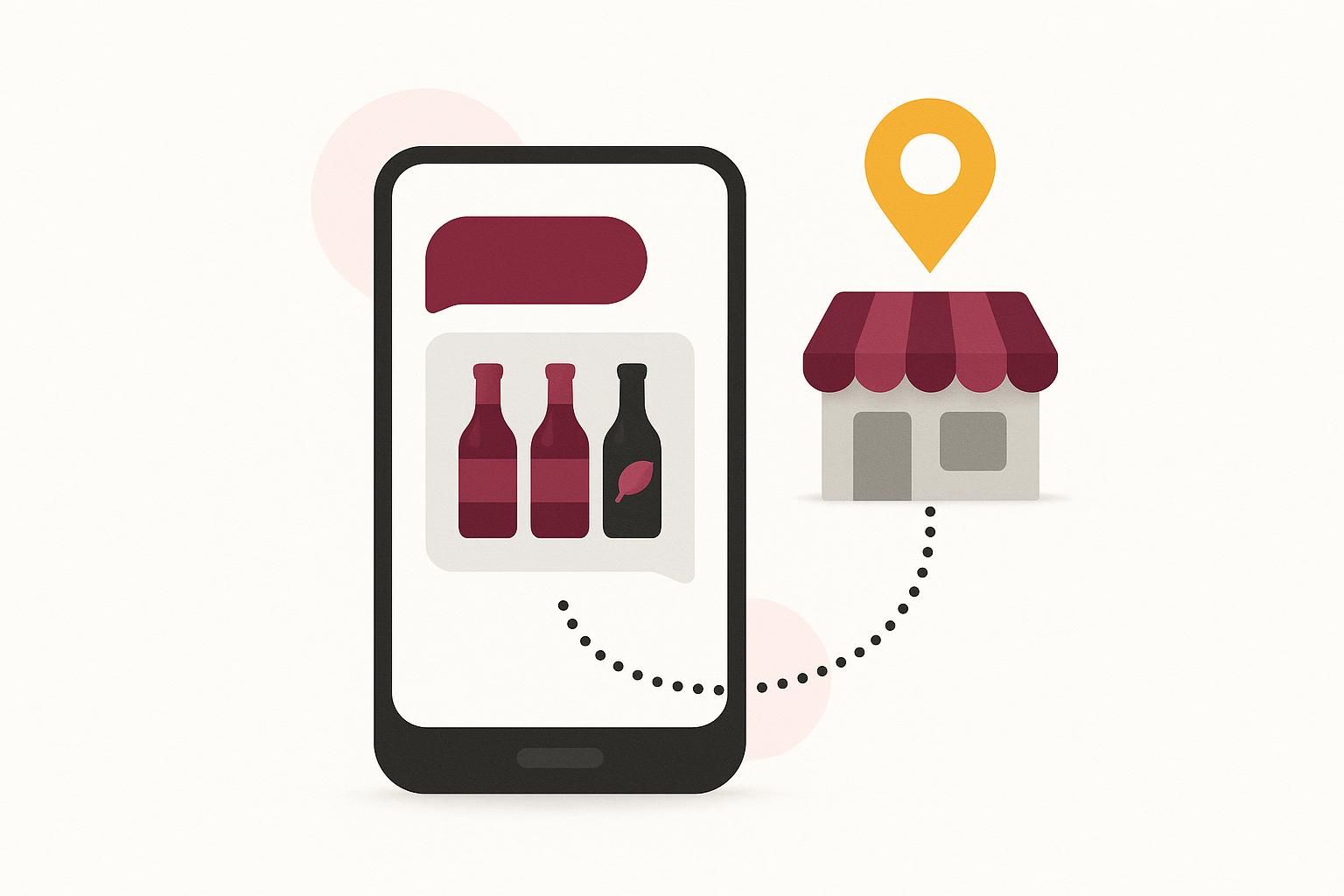
A customer opens an AI assistant on a Thursday evening and types: “I’m invited to a dinner party on Saturday, about eight people. I don’t know what they’re cooking. What bottle should I bring? Around $30.” Thirty seconds later she has three bottles, their prices, and the name and address of the shop around the corner that has them. She never opened a search engine and never saw a list of ten links.
This is how more and more people now choose wine, beer and spirits. AI assistants wine recommendations are no longer a curiosity: the assistant gives an answer, and the answer names a bottle and a place to buy it. For a merchant, the question is simple. When your customers ask, is your shop in the answer?
What changed: from ten links to one answer
For twenty years, being found online meant ranking on Google. You optimised product pages, bought ads for “Malbec under 20 dollars” and hoped the customer clicked your link among nine others.
AI assistants change the shape of the result. They do not return a list. They return a recommendation, with reasons, and often with a place to buy. That has three consequences for merchants:
- Fewer clicks reach the old results. Google’s own AI Overviews have cut organic click-through rates by around 25% in the categories that were tested.
- The traffic that does come converts better. Adobe’s data on US retail sites shows that traffic from AI assistants rose 393% in the first quarter of 2026 compared with a year earlier, converted 42% better than other traffic and generated 37% more revenue per visit (TechCrunch, April 2026).
- There is only room for a few names. An assistant recommends three bottles, not thirty. Being one of them matters more than being on page one used to.
What an AI answer looks like in practice
Here is a real answer from sommelier.bot, now available as a Grok Bot template, recorded in New York on 20 October 2026. The question was the dinner party above. The assistant first asked one thing it needed: what the friends like to drink and whether anyone avoids alcohol. “They like red, one guest doesn’t drink.”
The answer
- Safe choiceAntoine Sunier Beaujolais-Villages "Gamay Poursuite" 2024$29.99Flatiron Wines, 873 Broadway
- Something specialThibault Ducroux Morgon "Corcelette" 2023$29.99Flatiron Wines, 873 Broadway
- Alcohol-freeSaint Viviana Non-Alcoholic Cabernet Sauvignon <0.5% ABV$28.00Spirited Away, 228 8th Ave
Recorded with the sommelier.bot Grok Bot template, New York, 20 October 2026. Prices at the time of recording. The shops are public examples, not sommelier.bot clients.
Three things stand out. The answer is specific: producer, cuvée, vintage, price. It is honest about what it does not know: when asked to find the bottles nearby, it said which shops are close and suggested calling ahead to check the shelf. And it names shops. Those two New York shops are public examples, not sommelier.bot clients, but the point holds for any market: the answer sends the customer to a named place.
Why most merchants are invisible to AI assistants
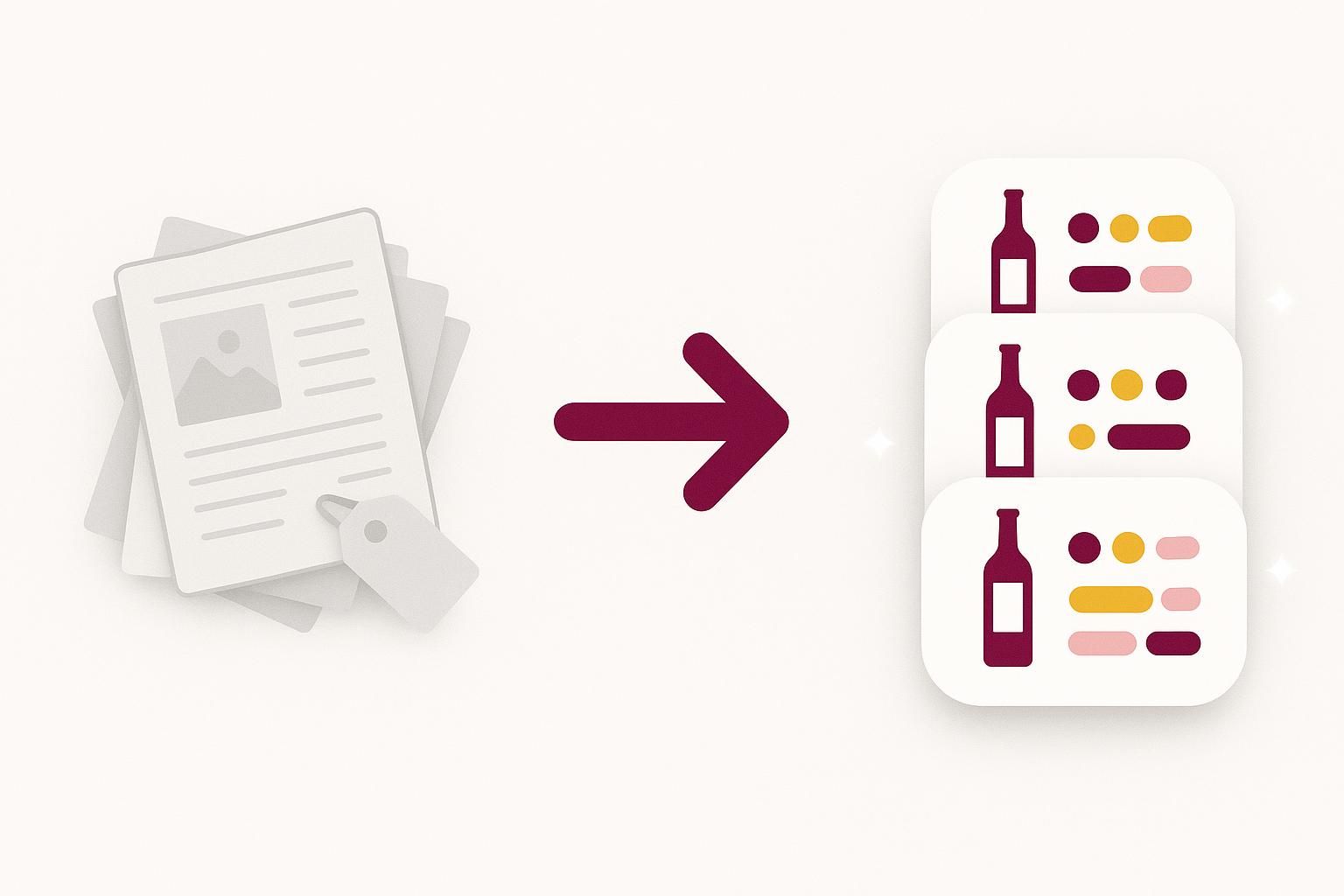
An assistant can only recommend what it can read. Many wine, beer and spirits merchants make that hard:
- The catalog is not online, or not readable. Many local shops do not publish their stock at all. Others publish it as images, PDFs or pages without structured product data.
- The product data is thin. “Red wine, 750 ml, $24” tells an assistant nothing about whether the wine suits a pumpkin curry or a gift for a Malbec lover. Grape, region, style, food pairings and taste are what an AI answer is built from.
- Nobody answers the follow-up questions. Customers ask “what goes with this?”, “is there an alcohol-free option?”, “can I pick it up today?”. If your shop cannot answer, the assistant sends them somewhere that can.
None of this needs a new website. It needs a catalog that machines can read and an advisor that answers like a good sommelier.
What merchants can do, step by step
1. Make your catalog readable
List every product with the details a sommelier would use: producer, grape or style, region, vintage, price, stock, and the occasions and dishes it suits. If you have no product feed, you can still start: the data can be taken from your website.
2. Put an AI sommelier on your own site
The same questions customers ask an AI assistant, they will ask on your shop: “What do I bring to dinner?”, “What goes with fish tacos?”, “I need a gift under 40 dollars.” An AI sommelier on your site answers them from your own catalog, in your brand, around the clock. On merchant sites, sommelier.bot reaches a 23% click-through rate, because it answers the question the visitor actually has.
Vinícola Ferreira in Brazil shows what this looks like. On loja.vinicolaferreira.com, an AI text banner under the main image invites visitors to explore the winery’s award-winning wines from the Serra da Mantiqueira, with one-tap questions for pairings, award winners and comparisons. Their AI sommelier, Livino, greets visitors and advises them on the winery’s own range, in Portuguese.
3. Be present where the questions are asked
Your own site is one place. AI assistants are the other. sommelier.bot is already available as a Grok Bot template, with the same pairing logic it uses on merchant sites, including an equal alcohol-free option in every answer. We are now connecting merchant catalogs to sommelier.bot on Grok, so that when someone asks where to buy, the answer can be your shop.
4. Measure what AI brings you
Tag the links that come from AI answers, ask new customers how they found you, and watch which questions they ask on your site. The questions tell you which products to stock, describe better or push.
Why this matters even more in Brazil and Chile
Many of the best wine shops and wineries in Brazil and Chile are small, and paid search against large marketplaces is expensive for them. An AI answer is built on how well a bottle matches the question, so a small merchant with a readable catalog has a real chance to be named. A winery in the Serra da Mantiqueira or a wine shop in Santiago can be the bottle the assistant names, if its catalog is readable and its advice is good.
How sommelier.bot helps
sommelier.bot is the AI sommelier for wine, beer and spirits merchants, used by 40+ merchants in 5 countries. It takes your catalog from your website, no feed required, enriches it with the data an AI answer needs, and puts an AI sommelier on your shop, wine list or website. And it is how your products can reach customers who ask an AI assistant first.
Retailer, producer, distributor, restaurant, hotel or wine bar? Get your products on Grok, or just try the sommelier.bot Grok Bot template yourself.
This is sommelier.bot, live: try it.
FAQ
Do AI assistants recommend specific wine shops?
Yes. When a shopper asks where to buy a bottle, assistants such as Grok, ChatGPT and Google’s AI answers can name specific shops, with prices and addresses, based on the product data they can read.
How does a wine merchant get found in AI search?
Publish a complete, readable catalog (producer, grape, region, vintage, price, stock, pairings), answer customer questions on your own site, and be present in the assistants where shoppers ask, for example through the sommelier.bot Grok Bot template.
Do I need a product feed?
No. A product feed helps, but sommelier.bot can take your catalog from your website and enrich it.
Does this work for beer, spirits and alcohol-free drinks?
Yes. The same logic applies to beer, spirits, sake, cider and alcohol-free products. sommelier.bot always offers an alcohol-free option as an equal choice.
Is this only for online shops?
No. Restaurants, hotels and wine bars can have their wine list recommended, and producers and distributors can have their range recommended by name.

