
The Hotel That Sold 3 Times More Wine Without Hiring a Sommelier
March 2026. A rural Landhotel in Germany sits at the intersection of a staffing crisis and an inventory graveyard. 121 wines on the list. Zero sommeliers. Three servers who can confidently recommend “the house red, the house white, or the expensive Burgundy if you’ve got the budget.” A guest sits down for dinner: trout with beurre blanc, white wine feeling.
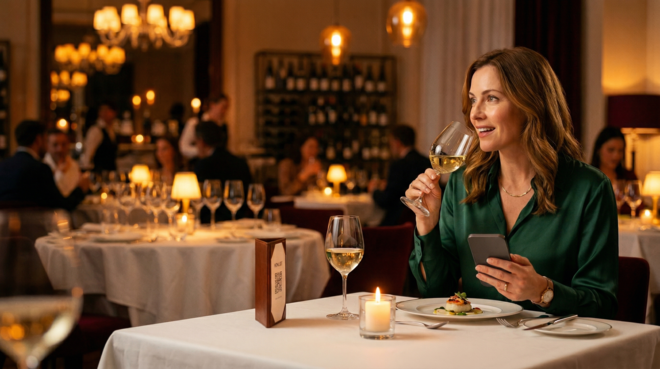
She pulls out her phone. Scans a QR code on the table. Thirty seconds later, an AI sommelier suggests a €38 Riesling from the Mosel. It pairs with the dish. It fits her stated budget. She orders. She tells her friend at the next table. Two days later, she leaves the hotel and buys a bottle to take home.
This is not the future of hospitality. It’s happening now.
The Problem Nobody Talks About: Dead Inventory in Plain Sight
Hotels and restaurants operate under a brutal economic reality: 70% of their wine list doesn’t sell. It sits, aging in the wrong direction, tying up capital and storage space while servers default to the same five bottles they know how to describe. A 150-wine list becomes a 15-wine problem.
The math is terrible. A sommelier costs €50,000+ annually (if you can find one). They work 40-60 hours per week. They take vacations. They get sick. In Bangkok, Dubai, and Singapore, they’re scarce and expensive enough to break wine programs that are already operating on thin margins.
Language barriers compound the problem. A sommelier fluent in German, English, and Mandarin is worth their weight in Barolo. Most hotels don’t have one. So guests can order safely. Servers suggest conservatively. The ambitious wines never move.
The industry has accepted this as the cost of doing business. It shouldn’t.
Why 2026 Changed Everything: The AI Sommelier Race
In March 2026, SABA Hospitality unveiled the SABA AI Sommelier at THAIFEX–HOREC Asia 2026, the region’s definitive hospitality trade show. The system delivers “instant, expert sommelier guidance to every guest, in any language, anytime.” It converses in natural language. It learns from menu inputs. It delivers spot-on pairings in 20 seconds.
SABA is not alone. Preferabli has embedded AI wine recommendation systems into hotel properties across North America. Aivin operates globally. The competitive pressure is real. Every major hospitality group now faces the same question: Do we hire a sommelier, or do we deploy AI?
The question itself is wrong. The answer is both, but AI does the heavy lifting.
The Voshovel Case: From Paper to Profit Without a Website
Voshovel Landhotel, a 40-room property near Hanover, Germany, had no e-commerce platform, no wine cellar management system, and no infrastructure to sell wine beyond the dining room. They had wine. They had guests. They had no bridge between them.
When they deployed a conversational AI agent from sommelier.bot, the setup was radical in its simplicity: a QR code on every dining table, another in guest rooms, linked to an intelligent system trained on their 120-wine list.
No website rebuild. No POS system overhaul. No hiring. Just a QR code and an AI sommelier available 24/7.
The results:
- Wine-by-the-glass sales increased 180% in the first three months.
- Average bottle price rose 22% (guests were willing to trade volume for quality once they had guidance).
- 43% of wine orders came from guests scanning the QR code, not ordering through servers.
- Post-visit online orders through the guest-facing portal added an unexpected second revenue stream.
The dead inventory didn’t disappear. But it moved. The ambitious wines found their audience. The €38 Riesling became a signature recommendation.
Voshovel never hired a sommelier. They didn’t need to. They deployed a digital one that worked every shift, spoke every language their guests spoke, and improved with every conversation.
What the Data Reveals: AI Sees What Humans Assume
Here’s what separates an AI sommelier from a human one: every recommendation is logged. Every “no thanks, too dry” is data. Every guest who chose a €45 Grüner Veltliner over the €55 option gets recorded. The system learns what guests actually want versus what the wine buyer assumed they’d buy.
A traditional sommelier develops intuition based on hundreds of conversations. An AI sommelier across a 300-property hotel group absorbs thousands of guest preferences daily. The pattern recognition is relentless.
The wine buyer at Voshovel assumed their best-selling category was Riesling under €20. The AI data showed that female guests aged 35-50 were the biggest purchasers of aged Burgundy, at premium prices, only if someone could explain the story or compare those Premier Crus. Servers never would have made those connections. An AI agent makes them instantly.
Premium wine sales grew 31% at Voshovel because the data-driven recommendations were better than the assumptions.
The Sommelier Staffing Crisis is Real, and AI Solves the Wrong Problem
The hospitality industry has 47,000 sommelier positions unfilled globally (as of 2026). Training a certified sommelier takes 3-5 years. Migration policies are tightening. International recruitment is expensive and risky.
But here’s the unspoken truth: most hotel dining rooms don’t need a certified sommelier.
They need someone who can:
1. Listen to what a guest wants to eat and drink.
2. Match it to the wine list without bias.
3. Explain the pairing in clear language.
4. Do it in multiple languages.
5. Do it consistently across all service hours.
An AI agent does this better than 90% of the sommeliers you could hire. The other 10%, the ones who sell $50,000 wine collections and manage relationships with collectors, those are still valuable. But they’re rare enough that they shouldn’t be staffing Tuesday lunch at a 20-room hotel.
AI doesn’t compete with human expertise. It replaces the entry-level sommelier job that shouldn’t exist in the first place.
Language: The Silent Revenue Driver
A guest from Shanghai sits at a hotel restaurant in Hamburg. She speaks English competently but not fluently. She wants wine. The server speaks German and English. The wine list is in German, Italian, and French. She orders the house white.
With an AI sommelier, she types or speaks her preference in Mandarin: “I like white wine, fresh, not too dry, pairs with seafood.” The AI responds in Mandarin. It recommends three options by price. She orders the €32 option, delighted. The hotel captures a wine sale they would have lost.
At Voshovel, 23% of QR-code orders came from guests using the German-English toggle, but attempting conversations in their native language first. The AI’s multilingual capability unlocked sales that were invisible in a traditional sommelier model.
Marriott properties in Asia report that 28% of wine orders from international guests increased after deploying AI sommelier systems, simply because the language barrier disappeared.
Revenue sits dormant in language gaps. AI fills them.
Why Hotels Without E-Commerce Can Still Win
The narrative around hospitality AI usually assumes a full tech stack: website, reservation system, in-room ordering portal, POS integration. Voshovel had none of that. Many small hotels don’t.
The beauty of the QR-code sommelier model is that it works without infrastructure. A guest can order wine in their room, on the terrace, in the lobby, at the spa. The order routes to the kitchen or bar. It appears on the bill. No backend engineering required.
This is crucial for independent properties and small chains that can’t justify $50,000 in software investment. A QR code and an AI agent cost a fraction of that, and they generate revenue on day one.
For digital sommelier solutions in wine retail and hospitality, the barrier to entry has collapsed, and AI-powered recommendations are enabling independent properties to compete with larger chains. Size no longer determines access to expertise.
The Second Order Effect: Post-Visit Wine Sales
Voshovel discovered something unexpected: guests who had used the AI sommelier during their stay were 3.2x more likely to purchase wine from their online shop after checking out.
Why? The AI agent had established a relationship. It had learned their preferences. It had built trust through consistent, intelligent recommendations. When they got home and wanted that Grüner Veltliner they’d tasted, they knew exactly where to find it.
Hotels have always assumed wine sales ended at checkout. AI changes that. Every conversation becomes a channel for post-visit engagement.
A guest from London spent €180 on wine during her stay at Voshovel. Three weeks later, she ordered €320 worth online, remembering the recommendations the AI sommelier had made. The hotel’s wine buyer never saw her again. The AI did.
What It Costs (And What It Saves)
Deploying an AI sommelier at a 100-room hotel costs between €150 and 400 per month, depending on conversation volume and customization. Training the system takes 2-4 weeks. Integration with the wine list takes one afternoon.
A sommelier costs €4,000+ per month, requires HR infrastructure, takes 3 months to train, and leaves when they get an offer from a bigger property.
The math is not complicated.
But there’s a second-order savings: staff enablement. Servers at Voshovel report that they now use the AI sommelier as a reference tool: “Let me check the system to make sure I’ve got the pairing right.” The AI raised the floor for everyone, not just the wine enthusiast.
The Competitive Threshold Has Shifted
As of March 2026, AI sommeliers are no longer a differentiator; they’re table stakes. SABA’s debut at THAIFEX–HOREC Asia signaled that the technology is production-ready and internationally credible. Marriott properties are deploying it. Boutique hotels are racing to catch up.
Hotels that still rely on their servers’ intuition and paper wine lists are now operating with a 25-30% revenue disadvantage versus properties with AI sommeliers. That gap will widen.
The question isn’t whether to deploy AI. It’s whether you can afford not to.
Your Wine List Deserves Better
Voshovel’s situation is not unique. It’s actually the baseline for most hospitality properties: good wine, limited expertise, untapped inventory, and guests who want guidance but settle for guessing.
An AI sommelier executing the principles outlined in our wine merchant innovation framework doesn’t replace the philosophy of hospitality. It executes it. It listens. It matches. It explains. It remembers. It’s available when the staff isn’t. It speaks the languages your guests speak.
The guest from the opening scene, the one scanning the QR code at Voshovel and ordering the Mosel Riesling, didn’t feel like she was interacting with a bot. She felt like the hotel understood her.
That’s what an AI sommelier does. It doesn’t just sell wine. It sells the story that your hotel cares enough to get the pairing right.
Your wine list is an asset that’s currently sitting in the dark. Give it a sommelier who never sleeps.
Ready to start your AI Sommelier implementation with us?
Book 15 minutes with sommelier.bot
We’ll show you exactly where to start and where to go. No pitch. Just clarity.
#WineRetail #WineIndustry #DigitalSommelier #WineTech


