
Why Premiumization Is the Biggest Opportunity in Wine AI
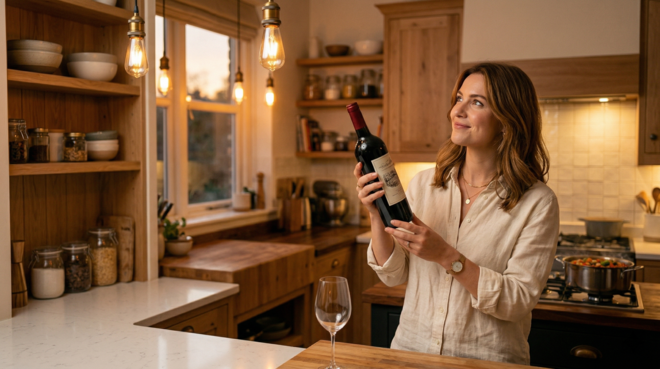
It’s April 2026. A 28-year-old in Berlin opens her wine app. Tonight: Thai green curry, 7:30 PM, three friends coming over. Her budget is €25. She doesn’t want “a nice white”, that empty instruction has paralyzed her in wine shops for years. She wants THE specific bottle from 4,000 SKUs in her usual retailer’s catalog. The one that nails her palate, fits her occasion, and justifies the price. She wants personalized intelligence delivered in 20 seconds.
This woman will never buy a case of €50 Hermitage to cellar. But tonight, she’ll spend more per bottle than she would have five years ago. And she’ll buy again next month.
This is not a niche. This is the wine market now.
The Uncomfortable Truth: Volume Is Down. Value Is Up. Everything Else Is Wrong.
The global wine industry is in structural decline on one metric that used to define success: volume.
In the US, volume slipped 5% to an estimated 298 million 9-liter cases in 2025. Europe is worse. The global share of drinkers who consume alcohol at least a few times per year has declined by 6%, and nearly a third of drinkers believe there’s room for more mindfulness in their consumption.
The industry’s panic response has been catastrophic: discounts, volume deals, price wars in the €7-12 segment. Cut, discount, sell more units. It’s exactly backwards.
Meanwhile, the €15-49 “massive” premium segment is posting year-on-year gains. Ultra-premium wines at €50+ are flat to positive, driven by affluent buyers whose purchasing is price-inelastic. The lowest-priced segment continues to erode. Revenue is now outpacing volume in aggregate, which means the bottles that are selling are selling at higher prices.
The uncomfortable truth: the wine industry’s future revenue doesn’t depend on selling more bottles. It depends on selling the right bottle to the right person at a higher margin.
That’s an AI problem. That’s a sommelier.bot problem.
Why Your Customer’s Willingness-to-Pay Is Contextual
Here’s what most retailers miss: the same customer wants different wines at different moments, with radically different willingness-to-pay.
Your premium customer might buy a €12 Tuesday night wine, something approachable, low-friction, not the focus of the evening. That same customer will spend €45 Saturday night when friends join, and wine becomes the centerpiece.
They’re not trading up. They’re trading contexts.
Traditional recommendation engines treat customers as static profiles. An algorithm that knows you “like Burgundy” and “spend €30 average” can’t serve both moments efficiently. It recommends either too cheap (you feel under-served) or too expensive (you revert to Tuesday-night pricing).
AI agents solve this through occasion-based, real-time recommendations. Same catalog, same customer, radically different intelligence depending on what you’re cooking, who you’re with, and what day it is.
AI agents don’t just increase conversion, they expand the revenue surface by matching willingness-to-pay to context. A customer spending €15 on Tuesday and €45 on Saturday spends €2,880 annually. One buying €7 weekly spends €364 annually and churns at 3x the rate. This is the premise behind sommelier.bot: occasion-based intelligence at scale.
One is worth six times the other.
The Math That Justifies Premium Pricing: Why Occasion-Based AI Drives Premiumization at Scale
Premium wine retail has always relied on service: a knowledgeable sommelier who understands your palate, remembers your occasions, and curates recommendations that justify higher prices.
That service is expensive. It doesn’t scale. It creates a ceiling on how many customers you can serve at premium margins.
AI doesn’t replace that service. It replicates it at scale.
Here’s what the data shows: AI-powered personalization in wine e-commerce is delivering significant increases in average order value, up to 15-30%, through reduced decision friction and increased basket confidence. Conversion rates are climbing. Long-term customer lifetime value is rising because customers return more frequently when they trust the recommendations.
Why? Because in a category defined by overwhelming choice, 4,000+ SKUs on most premium retailers’ sites, relevance is the most valuable commercial driver. Customers don’t need lower prices. They need to feel certain they’re making the right choice.
AI agents deliver that certainty. They reduce the cost of premium discovery. They make it possible to serve sophisticated customers at scale without hiring a sommelier for every cluster.
The Berlin customer didn’t get premium service because she paid for it. She got it because an AI agent understood her palate, her occasion, her willingness-to-pay, and her trust in the recommendation. She’s more likely to return. She’s more likely to spend more next time. She’s building a relationship with the retailer, not a transaction.
That’s not a feature. That’s the new business model for wine retail.
Gen Z and the Burgundy Paradox: Why Young Drinkers Want Premium Moments, Not Premium Cellars
Here’s the paradox that should terrify traditional wine marketing: Gen Z will pay €120 for a 2008 Pomerol delivered to their apartment tonight. They will not buy a 6-pack of €20 Côtes du Rhône 2023 to store in a temperature-controlled cellar.
The data is striking. In 2023, only 46% of Gen Z adults reported drinking in the past six months. By 2025, that number surged to 70%. Nearly 30% of Gen Z respondents said they were drinking more than they were two years ago. This is not sustained sobriety. This is selective, occasion-driven consumption.
When Gen Z drinks, they want:
Experience over collection. No prestige positioning. No “age your cellar for retirement value.” They want the right wine for tonight, delivered fast, with confidence that it’s the right choice.
Authenticity over tradition. Lighter, more approachable styles. Values-driven narratives. Minimal intervention wines, natural wines, low-ABV options. The traditional “Burgundy as status symbol” messaging fails with this cohort.
Occasion over accumulation. They’re not building wine collections. They’re drinking for social moments. Dinner with friends. A date. A celebration. One bottle. One night.
This sounds like a problem for premium wine retail. It’s actually the biggest opportunity.
Because occasion-based, recommendation-driven premium sales don’t require the customer to become a wine collector. They don’t require a 10-year commitment to aging. They require one thing: confidence that the bottle you’re buying right now is perfect for this moment.
That’s what AI agents deliver. And that’s why Gen Z drinkers, who are finally coming back to wine in larger numbers, will spend more per bottle than their predecessors, even if they drink less overall.
The Non-Alcoholic Trap (and Opportunity): Why “Drink Better” Includes Low-ABV
One more paradox: the customers who believe most strongly in “drink less, drink better” often think that phrase excludes them if they’re cutting alcohol.
It doesn’t. And your wine catalog should reflect that.
The low and no-alcohol segment is finally moving beyond health-conscious messaging. What’s emerging is a legitimately premium category: low-ABV wines from respected producers, serious non-alcoholic alternatives, and “real wine minus some alcohol” positioning that serves the same occasion-based, premium logic.
A customer ordering Thai food might choose a low-ABV natural wine for Tuesday night because they have to catch a flight at 6am or an important meeting at 8. Same customer, same occasion logic, same willingness-to-pay for the right recommendation.
When your AI agent understands that the “drink better” customer isn’t always the “drink more” customer, you stop leaving premium revenue on the table. You serve the full spectrum of the customers you’re actually retaining: selective, occasion-driven, willing to pay for certainty and curation.
Why Discounting Is the Wrong Response to Declining Volume
This is the less obvious part for traditional wine retail to realize: the response to declining volume should not be discounting. Discounting is an admission that you can’t differentiate your product or service. In premium categories, discounting kills margins and trains customers to wait for sales.
What actually works:
Service. Real sommelier-like intelligence. Recommendations that prove you understand the customer’s palate, budget, and occasion. This is what AI agents deliver at scale.
Curation. Not more choice (which paralyzes), but better choice. Intelligent filtering that surfaces the wine most likely to succeed for this customer rather than the generic “best seller.”
Confidence. In a category where most customers don’t have the expertise to evaluate their choices, confidence is a premium. Proof that the recommendation is tailored, not generic. That’s what moves someone from €15 to €45.
Discounting competes on price. Customers who respond to discounts are price-elastic, churning, and worth less annually. Customers you actually want are willing to pay for intelligence, service, and confidence. AI delivers these three with no margin erosion.
How to Actually Implement This: The Real Opportunity for Retailers
This isn’t theoretical. Smart retailers are already seeing it work.
Scaling personalization in wine e-commerce to build customer loyalty requires three things:
- Data on occasion, not just taste. Your recommendation engine needs to understand not just what the customer likes, but when they like it, who they’re with, and how much they’re willing to spend. That’s contextual data that lives in real-time behavior, shopping time, occasion signals, cart value, and browsing patterns.
- A catalog strategy that serves premiumization. Not every wine you stock serves this strategy. Some SKUs are margin-killers. Your AI needs to recommend from a curated set where every product can justify its price through the intelligence around it.
- Transparent, communicable reasoning. Your AI’s recommendation needs to be defensible to the customer. “I chose this because it’s lighter-bodied Burgundy from a cooler vintage that’s approachable now but can age” is premium service. “Customers also bought this” is a race to the bottom.
This is hard to build in-house. That’s why implementing AI solutions in wine e-commerce has become table stakes. Not nice-to-have. Essential to competing for the customers still in the market. The challenge isn’t whether to invest in AI, it’s how to implement AI solutions in wine e-commerce without breaking the bank.
The Biggest Mistake: Treating Premiumization as Upselling
Here’s where most retailers get it wrong. They see “drink less, drink better” and think: “We need to upsell. Turn €15 customers into €30 customers.”
That’s transactional thinking. It fails.
The actual opportunity is different: the customers still drinking are already spending more per bottle. They’re not price-sensitive on the right recommendation. They’re certainty-sensitive. They want proof you understand them.
Build that proof through AI agents that understand occasion, context, and confidence. Serve them with intelligence, not discounts. Match willingness-to-pay to context. Recommend the €12 Tuesday wine and the €45 Saturday wine with the same sophistication and trust.
The customer in Berlin didn’t choose to drink less. She chose to drink better. And she’ll spend more annually doing it than when she bought cheap wine every week.
That’s not a niche. That’s the wine market now.
The Bottom Line: The Opportunity Isn’t Selling More Bottles. It’s Selling the Right One.
Volume is declining. That’s structural. Demographic. Real.
But value is up. Premium segments are growing. Willingness-to-pay for the right recommendation is inelastic. Gen Z is returning to wine on their own terms—selective, occasion-driven, willing to pay for premium moments even if they never build a cellar.
The retailers thriving now are the ones who stopped competing on price and volume. They’re competing on intelligence, curation, and confidence. They’re using AI not to replace sommeliers but to scale sommelier-level service to thousands of customers simultaneously.
Your customer isn’t asking for more bottles. She’s asking for the right bottle, delivered with confidence, curated for her palate, her moment, and her budget.
That’s what AI agents do.
Everything else is noise.
Ready to start your 90-day AI conversion with us?
Book 15 minutes with sommelier.bot
We’ll show you exactly where to start and where to go. No pitch. Just clarity.
#WineRetail #WineIndustry #DigitalSommelier #WineTech


