
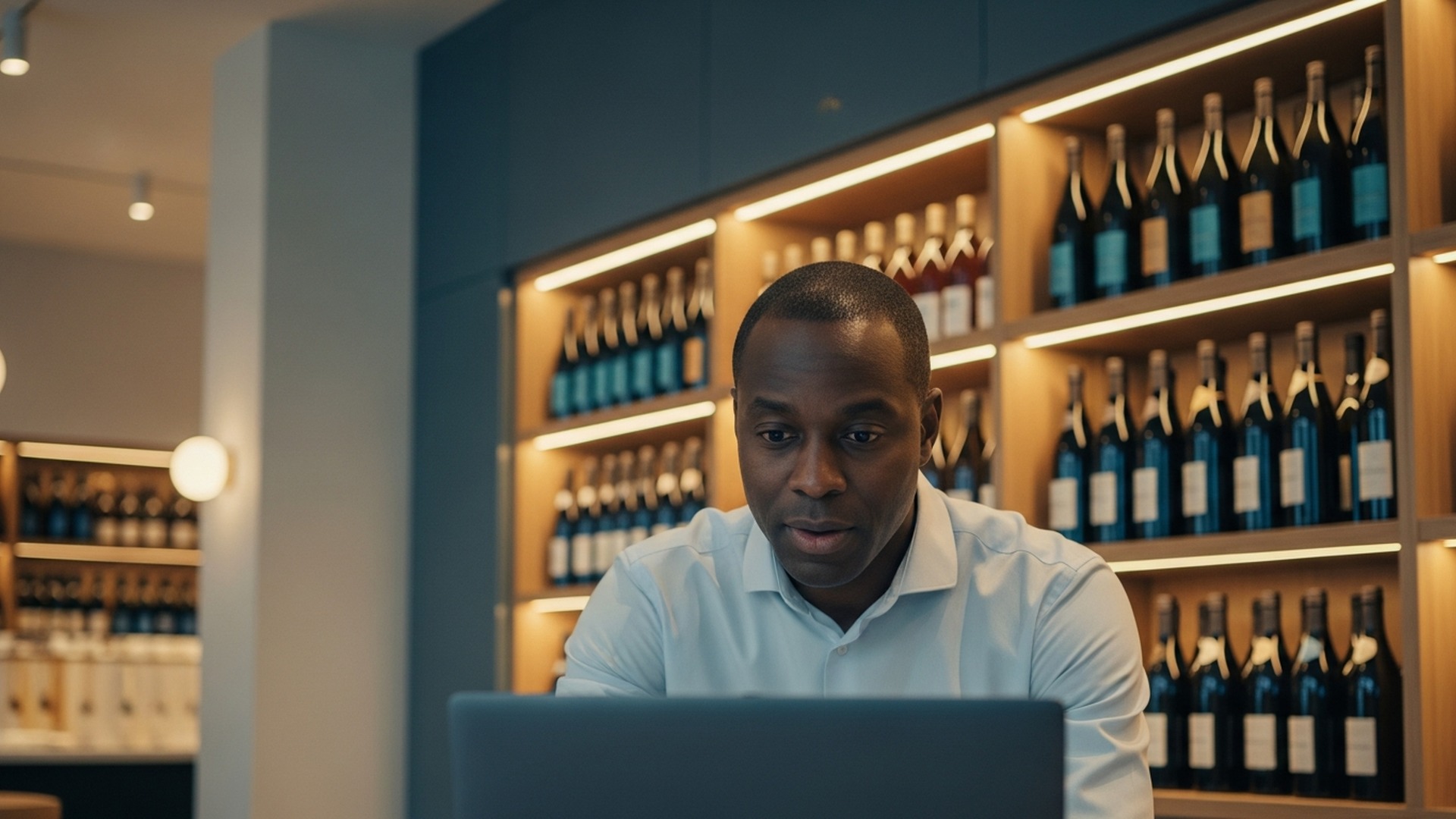
The Shelf Just Moved, and Nobody Announced It
For twenty years, “discovery” in wine had two doors. A buyer found a wine through a person, a merchant, a sommelier, a friend, or through a published score in a glossy magazine. Every marketing strategy in the trade was built around being behind one of those two doors.
Both doors are quietly closing. A third has opened, and most merchants haven’t noticed it’s now where the traffic walks through.
Your buyer no longer types “Sancerre” into Google and scrolls ten blue links. She asks an AI assistant a full, messy, human question: “a crisp white under €25 for grilled fish on Friday, nothing too oaky, my sister hates Chardonnay.” And the AI answers, not with a page of links, but with specific bottles, from specific sellers. The recommendation is the search result now.
The One Question That Should Keep You Up at Night
When an AI recommends wine to your customer, is it recommending yours?
That’s the entire game, and it’s brutally binary. There’s no second page of results in a conversational answer. The AI names a few wines, and if yours isn’t among them, you don’t exist for that buyer, no matter how good your inventory or your prices. We laid out the full mechanics of this shift in Optimizing for Google Is Obsolete: traditional SEO optimized to rank on a page; the new discipline, often called GEO, generative engine optimization, is about being the answer the AI actually gives.
Most merchants are still optimizing for a page that fewer and fewer of their buyers will ever see.
Why an AI Can’t Recommend Wine It Can’t Understand
Here’s the blunt mechanic underneath. An AI recommends from data it can read and trust. If your inventory is a tangle of inconsistent naming, missing tasting notes, half-empty fields, and “Cabernet 2019 Napa Red” as a product title, the machine cannot understand what you’re selling, so it recommends a competitor whose data it can parse.
We were direct about this in Your Wine Data is a Mess: an agent that can’t read your catalog will recommend your competitor’s wine instead. Your visibility in AI search is downstream of your data quality. A beautifully stocked shop with messy data is invisible; a smaller shop with clean, richly structured inventory wins the recommendation.
What “Getting Your House in Order” Actually Means
The work splits into two parts, and the first is unglamorous but decisive: structure your inventory so a machine can understand it. Every wine enriched with the attributes that matter, varietal, region, style, food pairings, drinking window, price tier, so an AI can reason about it accurately rather than guessing. A good data enhancement agent can standardize a messy catalog in a matter of days, turning “revenue scaffolding,” as we called it in The Merchant’s Playbook, out of what was previously an unreadable spreadsheet.
The second part is presence: putting an AI agent on your own pages so that when a buyer arrives mid-question, you’re answering in the same conversational mode they now expect everywhere else. The merchant who meets the AI-native buyer with an AI-native experience converts. The one who meets them with a region filter loses them to a marketplace.
This Wave Rewards the Prepared, and It’s Already Breaking
The uncomfortable timing: this isn’t a 2027 problem you can plan for next budget cycle. Conversational AI search is already where a growing share of discovery happens, and the merchants structuring their data and deploying agents now are accruing visibility that latecomers will have to claw back.
The shelf has moved off the page and into the conversation. The merchants who reorganize for that, starting with the unsexy work of clean data, are the ones who’ll still be discoverable a year from now. The rest will be wondering where their traffic went.
When an AI recommends a wine to your next customer, make sure it’s yours. → sommelier.bot
#WineRetail #WineIndustry #DigitalSommelier #WineTech


