

A customer bought a Beaujolais from your shop three weeks ago. Tonight she is back, looking for something for Sunday’s roast chicken. Your home page shows her the same bestsellers it showed everyone else. The filters ask her to choose a colour, a country and a price, as if you had never met.
In a good wine shop, that never happens. The person behind the counter remembers: “You liked the Beaujolais. Light, juicy, not too much oak. Try this one.” A wine taste profile is how a website does the same thing. Here is how sommelier.bot builds one from the first tap, with no login. And how it turns a first visit into a reason to come back.
What a wine taste profile is, and what it is not
A taste profile is a short, running picture of what one shopper enjoys: the styles they reach for, the body and sweetness they like, the dishes they cook, the budget they are comfortable with. It is the thing a good merchant carries in their head about a regular.
It is not a customer account, an order history or “customers who bought this also bought”. Those tell you what someone did. A taste profile tells you what they like.
Most wine sites have a catalogue, a search box and filters instead. All three wait for the shopper to know what to ask.
The first tap: how the profile starts without a login
The profile starts the moment a visitor touches an AI Banner. There is no form, no account and no empty box to type into. The visitor taps a choice.
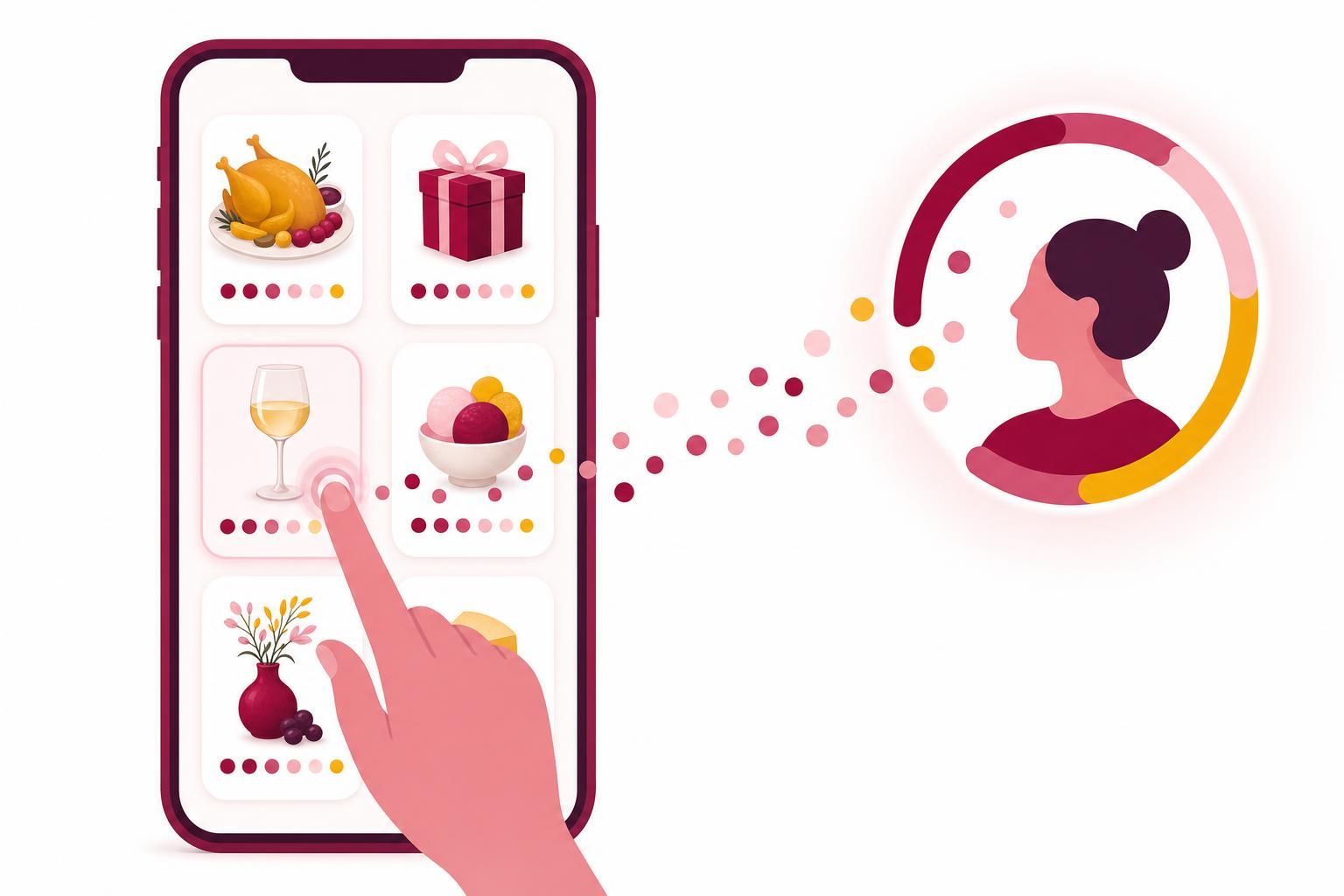
Take the grid banner on your home page. It shows six visual choices instead of a search field: a dinner tonight, a gift, something to discover. Each tap is one signal. “A gift, around 40 euros, for someone who likes red” already says more than most visitors would ever type.
The conversation then opens already knowing the page and the choice made. It does not start with “How can I help you?”. It asks the next useful question, such as the dish, the guests or the budget, again as one-tap choices. Every answer goes into the profile.
This is the live AI Banner, right here in this article: tap a choice and watch the profile start.
Behind each tap sits the data. sommelier.bot matches your catalogue against a database of 3 million wines and spirits, with over 30 attributes per product. A taste for “light and juicy” only helps if your bottles are described that way.
The match score: the profile at work on every bottle
A profile is only useful if the shopper can see it working. The first place they see it is the match score.
Every bottle the AI sommelier recommends shows how well it matches what the shopper asked for and likes. On your product pages, the taste match banner sits near the price or the add-to-cart button. After a few taps, it scores that bottle against the visitor’s palate and says why, in one line.
Think of the customer from the opening, now on the page of a Côtes du Rhône. The banner tells her it is a strong match: a little fuller than the Beaujolais she liked, and good with roast chicken. That one line answers the question she would have asked a person in the shop: “Will I like it?”
A match score does three things for a merchant:
- It removes doubt. Doubt is what makes a visitor leave a product page.
- It is honest. A low match says so, and that trust sells the next bottle.
- It makes the profile visible. The shopper sees that the shop has learned something about them.
Taste sliders: a shared language for body, sweetness and acidity
Most shoppers cannot describe what they like. They know it when they taste it. The taste profile banner gives them the words.
On a product page, it shows the bottle on four scales: style, body, sweetness and acidity. A shopper who liked a light red sees at a glance that this one is a step fuller. Someone who finds most whites “too sharp” sees where the acidity sits before buying.
On desktop, the side panel goes further. Next to the picks, it shows the wine regions on a map and a “did you know” story for the table. It also shows a taste comparison: two or three wines side by side, with the one difference that matters.
Over a few visits, the shopper learns their own palate through your shop. That is hard to find anywhere else.
Memory across visits: questions never asked twice
Here is where the taste profile earns its name. The shopper who comes back is not a stranger.
- Questions already answered are not asked again. If she said she prefers reds under 25 euros, she is not asked her budget again.
- Top picks on category pages get more personal as the visitor taps. Two visitors on your “red wines” page see different bottles ranked first.
- The conversation picks up from any banner, on any page, with what it already knows. A tap on the home page and a question on a product page feed the same profile.
- A returning shopper gets picks that fit their taste, from the first screen.
This is what personalized wine recommendations should mean: not “Hello, Anna” at the top of an email, but a shop that remembers the Beaujolais and suggests the next step from your own shelves. Only from your shelves: the AI sommelier recommends only what is in stock.
It also stays a good salesperson. It narrows to two or three bottles and pairs with the dish. Its sales techniques are chosen and validated by Lionel Rosnet, WSET Diploma educator, and it never uses pressure or fake scarcity. More in what it means for an AI sommelier to think like a sommelier.
Why remembered customers come back
A shop that remembers you is a shop you return to. Every visit makes the next one easier and more accurate, so the reason to come back grows with each tap.
Across live merchants, more than 60% of conversations end with a click to a product, and the conversion rate is 15%. The bar a well-made experience aims for is higher still: to double both sales and the return rate. That is an ambition, not a promise. Each merchant measures it during the free month, against a share of its own visitors who do not see the AI sommelier.
Privacy by design: anonymous, and in the EU
Memory raises a fair question: what is kept, and about whom? The answer is built into the product.
- No login, no account. The only identifier is a random session ID created in the browser.
- That ID is kept on your shop’s domain. It is not shared between shops and not linked to a person.
- No names, no email addresses, no payment data are collected by sommelier.bot. No third-party trackers.
- The data stays in the EU, and it stays yours. sommelier.bot is not a marketplace.
For your cookie policy, the session ID is a functional item: conversation memory. A data processing agreement is available on request.
Shoppers get personalization without handing over who they are. That is one more reason to trust your shop.
Try it from the start: the grid banner above is what a first-time visitor sees on a home page.
Where taste profiles live on your shop
A taste profile is built across pages. A good first set of banners:
- Home page: the grid banner, where the profile starts.
- Category pages: top picks, ranked for each visitor.
- Product pages: taste match near the price, the taste profile sliders near the description, and similar products.
- Articles and guides: the text banner, inside the story.
Setup is two lines in the head of your site and one tag per banner, on any CMS. The code never blocks the page. Details in how to turn any wine website into an AI sommelier and on the AI Banners page.
The second visit is where loyalty starts
Go back to the customer and her roast chicken. With a wine taste profile, her second visit opens with what she likes. The bottle she looks at carries a match score, and no question is asked twice. Your shop remembers for her.
That is the difference between a catalogue and a merchant. More and more shoppers will meet AI assistants that remember them; every website now needs AI, but not a chatbot. The shops that remember their customers first will be the ones those customers come back to.
sommelier.bot has been built for the wine trade since 2019 and runs with 40+ merchants in 5 countries. See a taste profile form in the live demo, or start your free month and measure it on your own visitors.
FAQ
What is a wine taste profile?
A wine taste profile is a running picture of what one shopper enjoys: style, body, sweetness, acidity, the dishes they cook and their budget. sommelier.bot builds it from the shopper’s taps and answers, and uses it to recommend bottles from the merchant’s stock.
Do shoppers need an account or a login?
No. The taste profile starts with the first tap, with no account and no login. The only identifier is a random session ID kept in the browser on the merchant’s own domain.
How is the match score calculated?
The AI sommelier compares a bottle with what the shopper asked for and likes, drawing on product data such as grape, region, style and structure. The score appears after a few taps, with a one-line reason.
Does the taste profile help returning customers?
Yes. A returning shopper is not asked the same questions twice and gets picks that fit their taste. Each merchant measures the effect on its return rate against a control group of its own visitors during the free month.

